ISA or pension? The UK optimiser's oldest argument, settled properly
ISA for flexibility, pension for tax relief. The honest answer is both, in the right order. A walkthrough of how the split actually works.
By Mike Gallagher,
Over coffee someone says they would go all in on the ISA, because it is more flexible. Someone else says they would go all in on the pension, because free money from the government. Both are wrong, and not because either one is bad. The one-at-a-time framing misses the point.
What each one actually does for you
An ISA gives you tax-free growth and a zero tax bill on withdrawal, at the cost of coming from already-taxed income. The £20,000 annual allowance is generous and you can touch it whenever you like. No lock-up. No tax on withdrawal. No hassle on death transfers within allowances.
A pension gives you tax relief at your marginal rate on the way in, compounds tax-free, and pays out mostly taxed on the way out. Workplace pensions usually include an employer match. Salary sacrifice layers on a national insurance saving for both you and your employer. The money is locked until 57 (rising), and 25 percent of the pot comes out tax-free at retirement up to a cap.
The difference is not flexibility versus returns. The difference is when you pay tax and how much.
The order most UK optimisers should run
Something like this, assuming no high-rate debt.
- Take the full employer pension match. It is pre-tax free money and nothing else touches that.
- Fill any high-rate tax relief headroom via pension contributions if you are in the higher or additional bands.
- Contribute to an ISA for flexibility, up to £20,000 a year.
- Put more into the pension if you can, up to the annual allowance.
- General investment account if the pension and ISA are full.
That is not advice. It is the sequence most sensible plans land on for a higher-rate earner who isn't saving to buy a house in the next two years.
Where the answer flips
A basic rate earner gets 20 percent relief on the way in and pays 20 percent on the way out, roughly. The ISA suddenly looks better because the tax arithmetic is a wash and the flexibility is free. A higher rate earner getting 40 percent relief in and paying 20 percent out wins more on the pension side. An additional rate earner with access to salary sacrifice is getting 45 percent relief plus national insurance. The pension becomes dominant.
Age matters too. If you are 50 and likely to access the pension in seven years, the pension's lock-up isn't a cost worth worrying about. If you are 32 and think you might want to buy a second property in your forties, the ISA's liquidity earns its keep.
The honest answer is both, in the right order, sized to your marginal rate and your horizon. That sentence is the entire blog post.
What this looks like when you model it
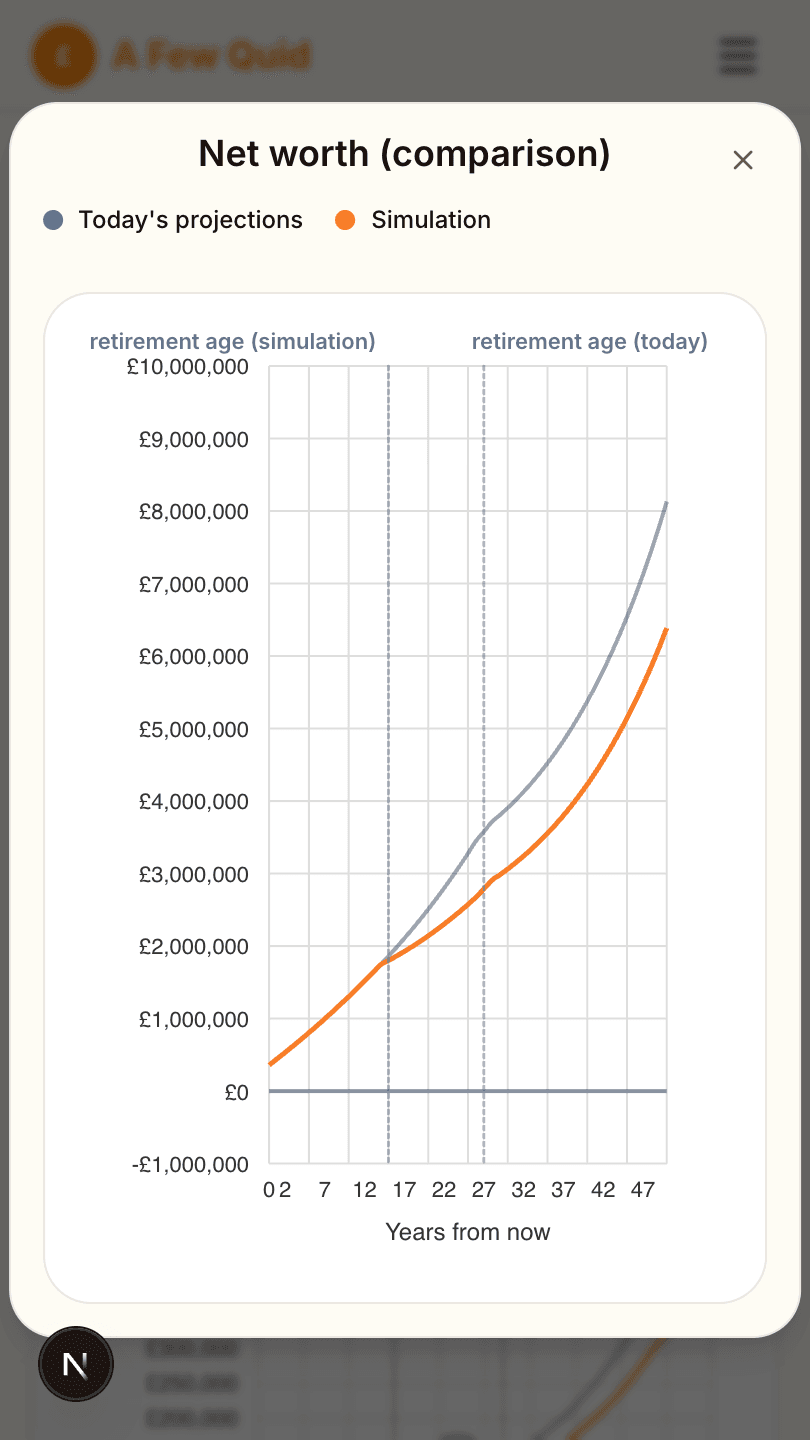
A Few Quid compares the two strategies as parallel scenarios, with the correct UK tax on the pension exit and full ISA tax-free withdrawal. The net worth line after tax tracks the same shape for either strategy for a decade, then starts to separate around retirement age. The gap is usually tens of thousands of pounds.
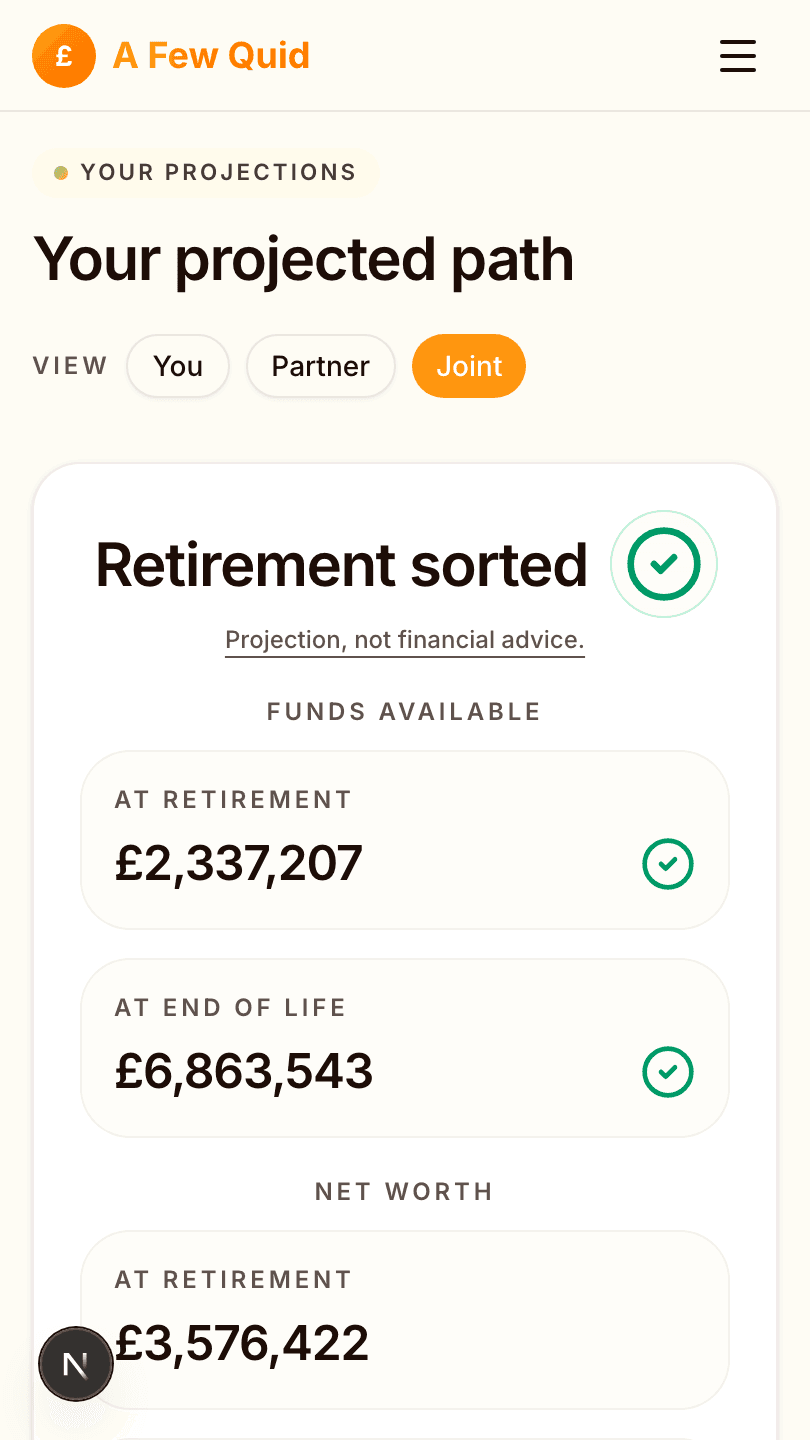
Running the comparison takes a few minutes. Making the wrong choice for twenty years costs considerably more.