One pay rise, three different futures
A raise can land three different ways depending on where it goes. Take home, pension, or ISA. Running the three futures side by side.
By Mike Gallagher,
The email arrives. A raise on the base salary, effective April. Two minutes of pleasant surprise, then the question. Where does it actually go.
On paper, a raise is a raise. In practice it splits three ways, and the three ways look very different at retirement.
Path one, take-home
The raise lands in the payslip as a bigger gross figure. For a higher rate earner, that ends up as roughly 58 percent in the account after tax and national insurance. Some of it funds slightly better groceries, slightly nicer holidays, slightly less anxiety about the standing order list. Most of it gets absorbed. Lifestyle adjusts. The account balance a year later looks roughly like it did before the raise.
This is the default path. It happens without a decision. It is also the path with the worst long-term number by some distance.
Path two, pension
The raise sacrificed into the pension, at the full gross amount. Pre-tax, so the whole amount goes in. Add the national insurance saving if the employer passes it through. Compound for twenty years at 5 percent real and it grows to several times its original value in today's money. At twenty-five years it is more.
You don't see the money now. You won't until 57 at the earliest. The compounding does heavy work on it and the tax treatment on exit is gentler than the 42 percent you would have paid on the way in as cash.
Path three, ISA
The raise taken as cash (so roughly 58 percent after tax) and sent to the ISA. No further tax on growth or withdrawal. Twenty years of compounding at 5 percent real on the post-tax amount is smaller than the pension path on a like-for-like basis, because you started with less money. But with total flexibility.
Three lines side by side
Take the same raise, split across three scenarios over twenty years. Cash path levels off near today's net worth, maybe a slight uplift. ISA path adds a meaningful chunk. Pension path adds roughly double that again.
The cash line is not zero. Some of the extra income will have found its way into savings. But the absence of an explicit decision usually means most of it didn't.
Every raise is a decision. Not making the decision is the decision that usually loses.
The compromise
The realistic answer is rarely 100 percent of any one path. It is some of the raise enjoyed, some of it sent to the pension, some of it parked in the ISA. What matters is that the split is deliberate.
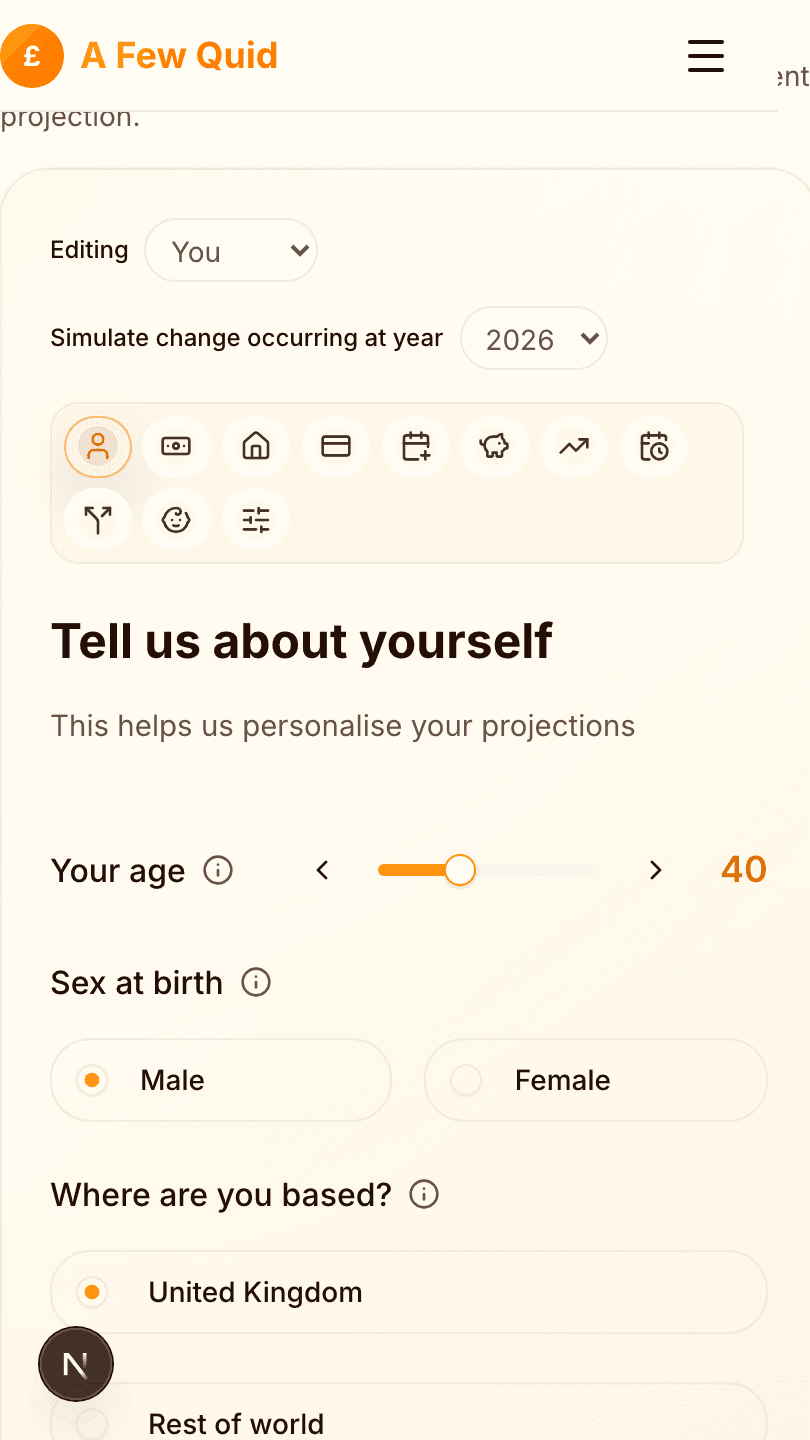
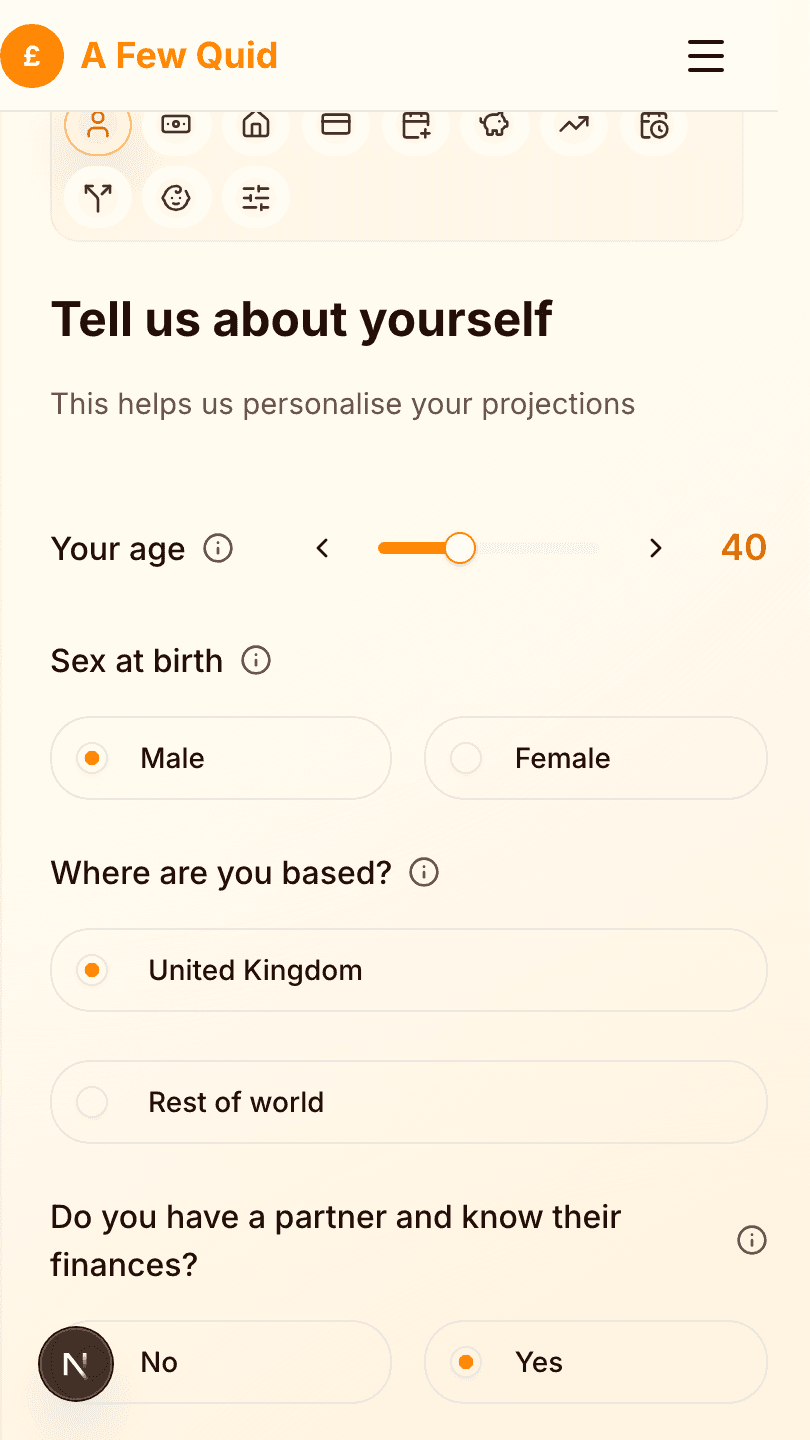
A Few Quid lets you model the raise as three parallel scenarios and see the three lines. You pick a split. You see the resulting path. You sign up to it, and then you update the standing orders.
The app isn't telling you what to do with the raise. It is showing you what each answer looks like twenty years from now, so you can pick the one you would rather be holding in 2046.