Your partner's financial situation has tax implications on yours
Child benefit, allowances, and joint planning depend on both incomes. Modelling your finances without your partner's leaves money on the table.
By Mike Gallagher,
You get an HMRC letter. High Income Child Benefit Charge. You didn't claim child benefit. Your partner did. Apparently that now costs you something, because your income is higher than theirs.
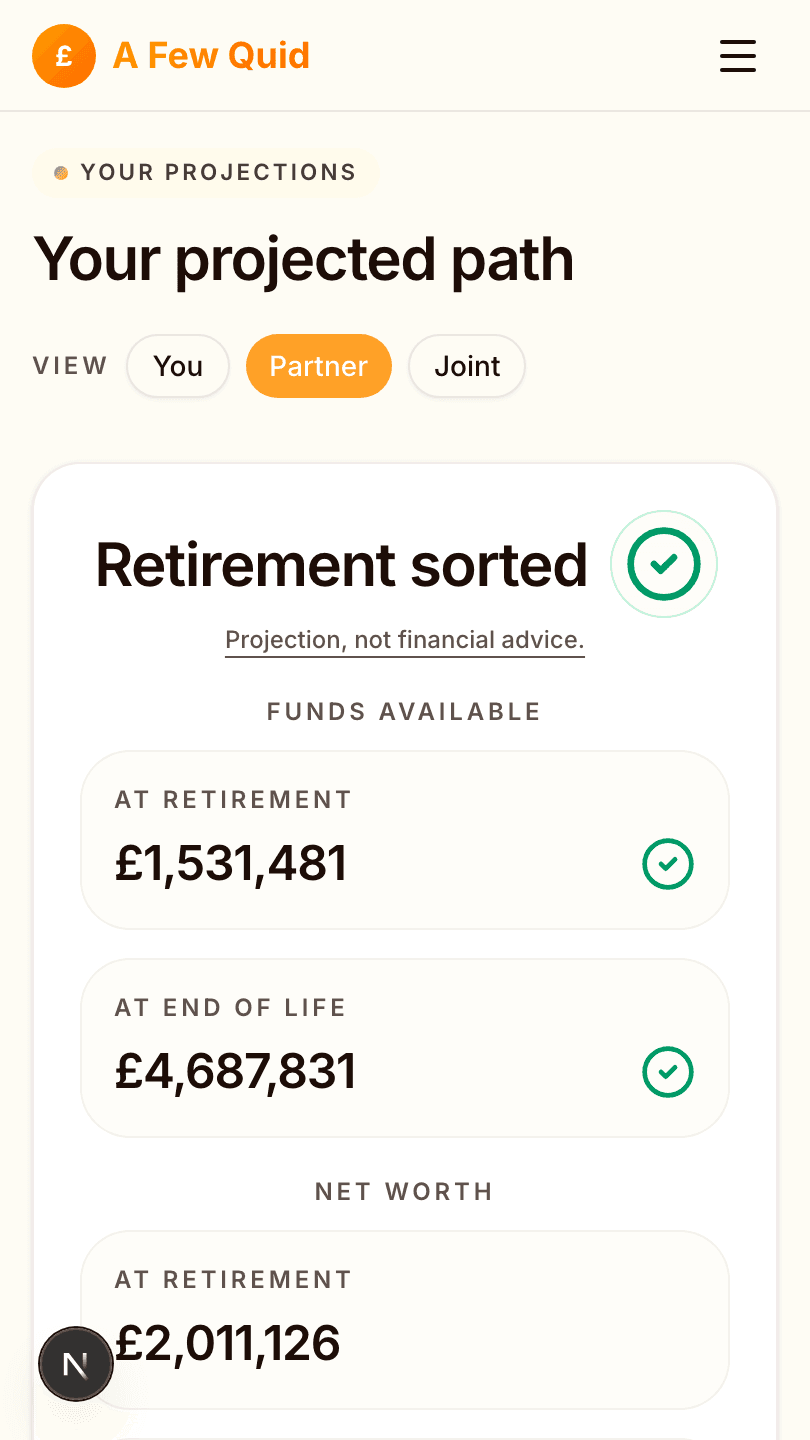
Where incomes interact
Not directly through tax bands. Your own income determines your own bands and allowances. What interacts is the set of thresholds where one partner's income changes something for the household.
The clearest example is child benefit. The HICBC kicks in when either partner earns over £60,000 adjusted net income. It is the higher earner who pays, not whoever claimed the benefit. The tax fully claws it back by £80,000. A benefit nominally collected by one partner gets fully reversed via the other partner's tax code.
Another is marriage allowance. If one partner earns under the personal allowance and the other is a basic rate taxpayer, they can transfer £1,260 of allowance across. Small money, but real.
A third is housing affordability. A lender looks at joint income. A drop in one partner's income can shift what you can borrow, which shifts what you can buy, which shifts the household projection.
What to model
- Each person's income, separately, with their own bands.
- Shared outgoings and who pays what.
- Thresholds that straddle the household. Child benefit, childcare funding, council tax reductions.
- Pension contributions by each person, separately, because the annual allowance is per person.
This is not hypothetical. A plan that treats the household as one blob will usually miss at least one allowance that wasn't being used, or one charge that was being paid without needing to be.
Your partner's financial situation can have tax implications on yours. Not through your band directly, but through the thresholds that connect the two incomes.
Running both incomes together
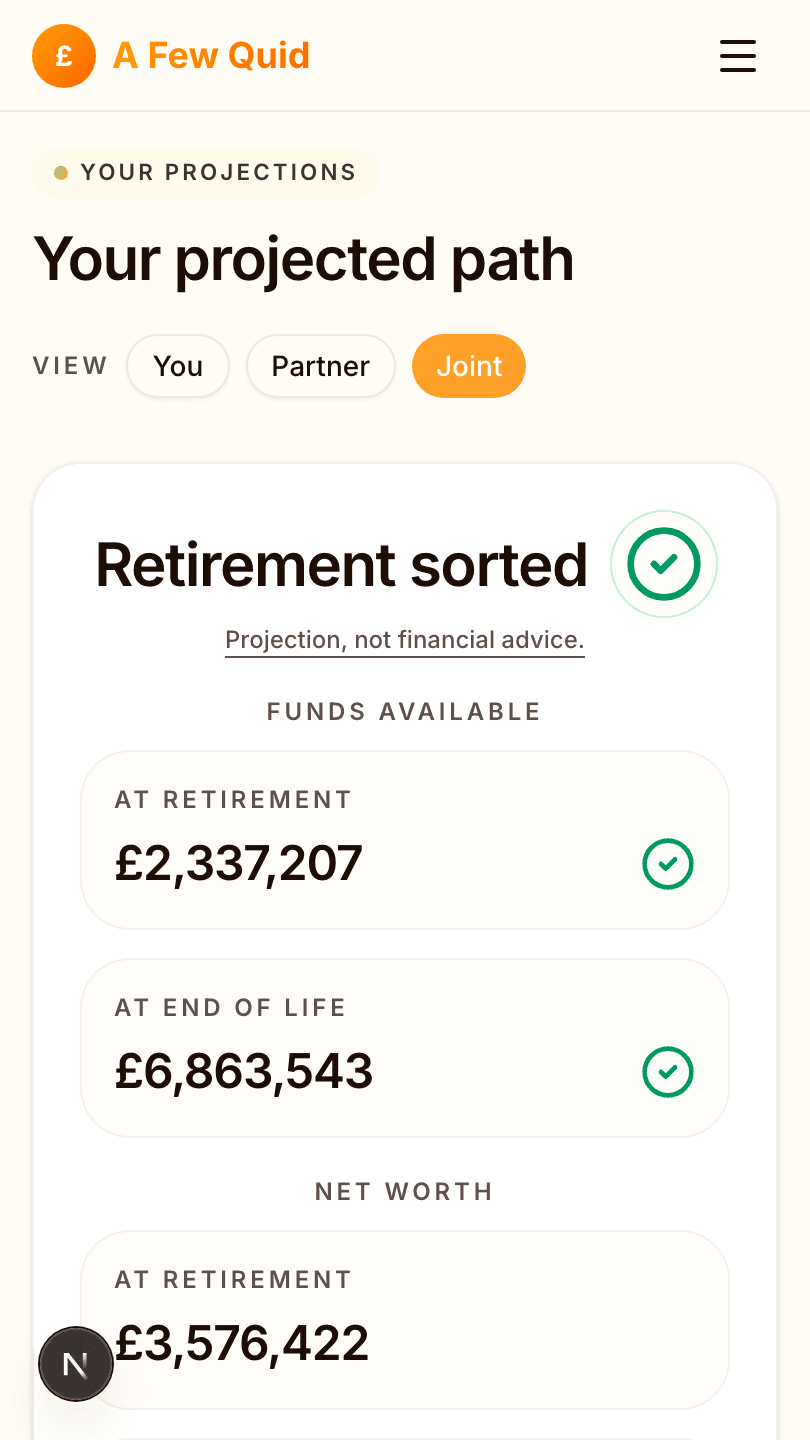
The useful view is both salaries side by side, with both pensions, both ISAs, and the household's shared overheads in the middle. Income flows into each actor. Tax comes out of each actor's income using their bands. Leftover money goes into their savings or gets pooled for joint spending.
That view exposes the questions nobody wants to answer casually. Should the lower earner fill their ISA first because their next pound of pension relief is at 20 percent, not 40. Should the higher earner sacrifice more to pull under a threshold. Should parental leave fall on one side or the other. These are real decisions with real numbers.
The cost of ignoring it
The cost is rarely catastrophic. It is usually a slow leak. A marriage allowance never claimed. A child benefit charge paid year after year when a small sacrifice would have turned it off. A pension contribution placed on the wrong partner's plan.
Over a twenty-year window, the leak adds up. A few hundred a year, compounded, is tens of thousands at retirement.
A Few Quid makes both people visible on the same plan, with each person's own tax profile and each shared threshold applied where it matters. You won't catch everything by hand. That is the point of the tool.