The £100k tax trap, and the one lever that gets you out
Earning over £100k in the UK costs you 60p in the pound thanks to the personal allowance taper. Here is how to model your way back under it.
By Mike Gallagher,
You get a pay rise that takes you over the £100,000 line and notice the take-home barely moves. You check the payslip. Tax has jumped harder than you expected. That is not a mistake. That is the personal allowance taper doing what it was designed to do.
The UK personal allowance is £12,570. Between £100,000 and £125,140 of adjusted net income, you lose £1 of allowance for every £2 you earn over the threshold. By the time you hit £125,140 the allowance is gone. On that slice of earnings you pay income tax at the higher rate and lose tax-free allowance at the same time. The effective marginal rate sits at 60 percent. On a decent chunk of that raise, you keep 40p in the pound.
The raise that doesn't feel like a raise
Take a salary that crosses the £100,000 line. The gross increase above the threshold sits inside the 40 percent band, plus the 20 percent worth of lost allowance, plus 2 percent national insurance. That is 62p in the pound gone before you see any of it. A pay rise that looked substantial at the gross number becomes a small bump in take-home, in exchange for pushing a lot more of your income into higher-rate tax.
Most people don't notice until they do the sums. The payslip shows a bigger gross and a smaller-than-expected net, and it gets waved away as just the tax. But the 60 percent band is not the same as ordinary higher-rate tax. It is the worst marginal rate in the UK system for normal earners.
The one lever that actually works
The cleanest way back under £100,000 is a pension contribution, usually through salary sacrifice. That lowers your adjusted net income by the amount you sacrifice. Push enough of the excess into the pension and your taxable income drops back to £100,000. The allowance comes back in full.
Before you do that, a few things to check.
- Your employer offers salary sacrifice. Not every workplace scheme does.
- You are under the pension annual allowance, which is £60,000 gross in 2026 for most people, including employer contributions.
- The extra pension money is something you actually want locked away until age 57.
- You are not losing other things that scale with take-home pay, like mortgage affordability calculations.
The last one matters more than people expect. Halving your apparent salary to fix the tax bill sometimes costs you on the borrowing side. A lender looks at gross salary minus sacrifice, not at pension contributions that eventually return to you.
The personal allowance doesn't evaporate because you earned more. It evaporates because HMRC decided it should, and the rules for getting it back are published in plain writing.
Some people take the hit and accept the 60p rate as the cost of a bigger gross. That is a choice. It is rarely the mathematically right one if you have more than a decade of working life left. The pension route defers tax on that chunk to retirement and almost certainly pays less tax on the way out than the 60 percent you would pay on the way in.
Running the numbers before payroll locks you in
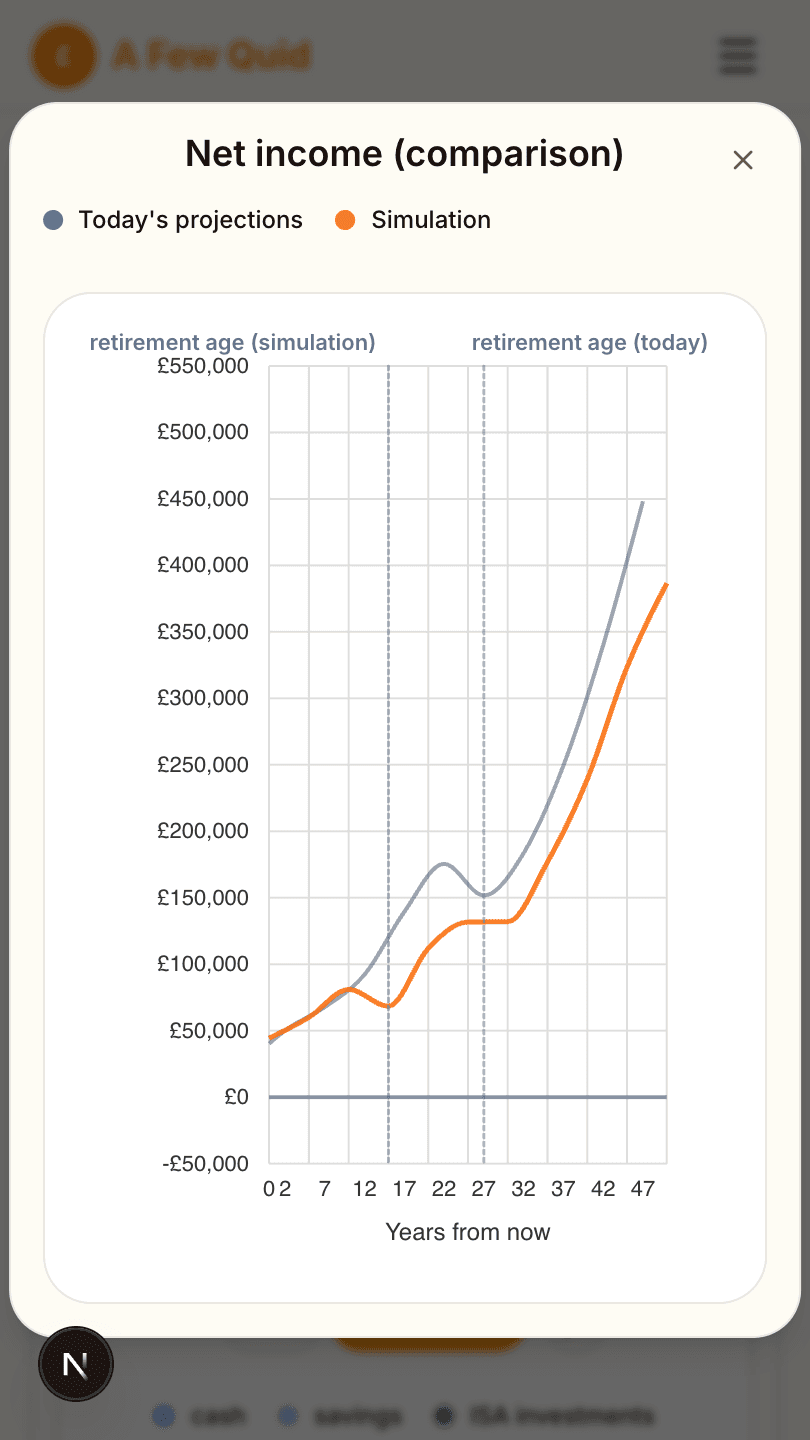
A spreadsheet will get you close but it will not tell you how the decision rolls forward. The interesting question is not what your take-home is this year. It is where your net worth lands in fifteen years under each path.
A Few Quid models it as two scenarios side by side. One path keeps the higher take-home, invests what is left after tax, and pays the 60 percent on the way in. The other path sacrifices into the pension and compounds the pre-tax amount. Both include the relevant tax rules on exit. The gap between the two lines is the real answer, and it usually surprises people.
The point is not that one is always better. The point is that just taking the money and sorting it out later costs real numbers, and those numbers are knowable before you tick the box on the payroll form.