What a career break actually costs (hint, it isn't the salary)
A year off work doesn't cost you one year of salary. It costs the pension contributions you skipped and the decades of growth on top.
By Mike Gallagher,
Someone at the pub talks about taking eighteen months off. The easy bit is counting the salary they won't earn. That number is wrong, or at least it is only a fraction of the answer.
Say you take eighteen months off. The direct cost looks like a year and a half of gross salary. After tax, the amount you'd actually have missed is smaller. You have it saved, or nearly. The decision feels tractable.
What the arithmetic misses is the pension. Your workplace pension was getting 8 percent of qualifying earnings or more every month, with some split between you and your employer. For eighteen months, that pot doesn't grow.
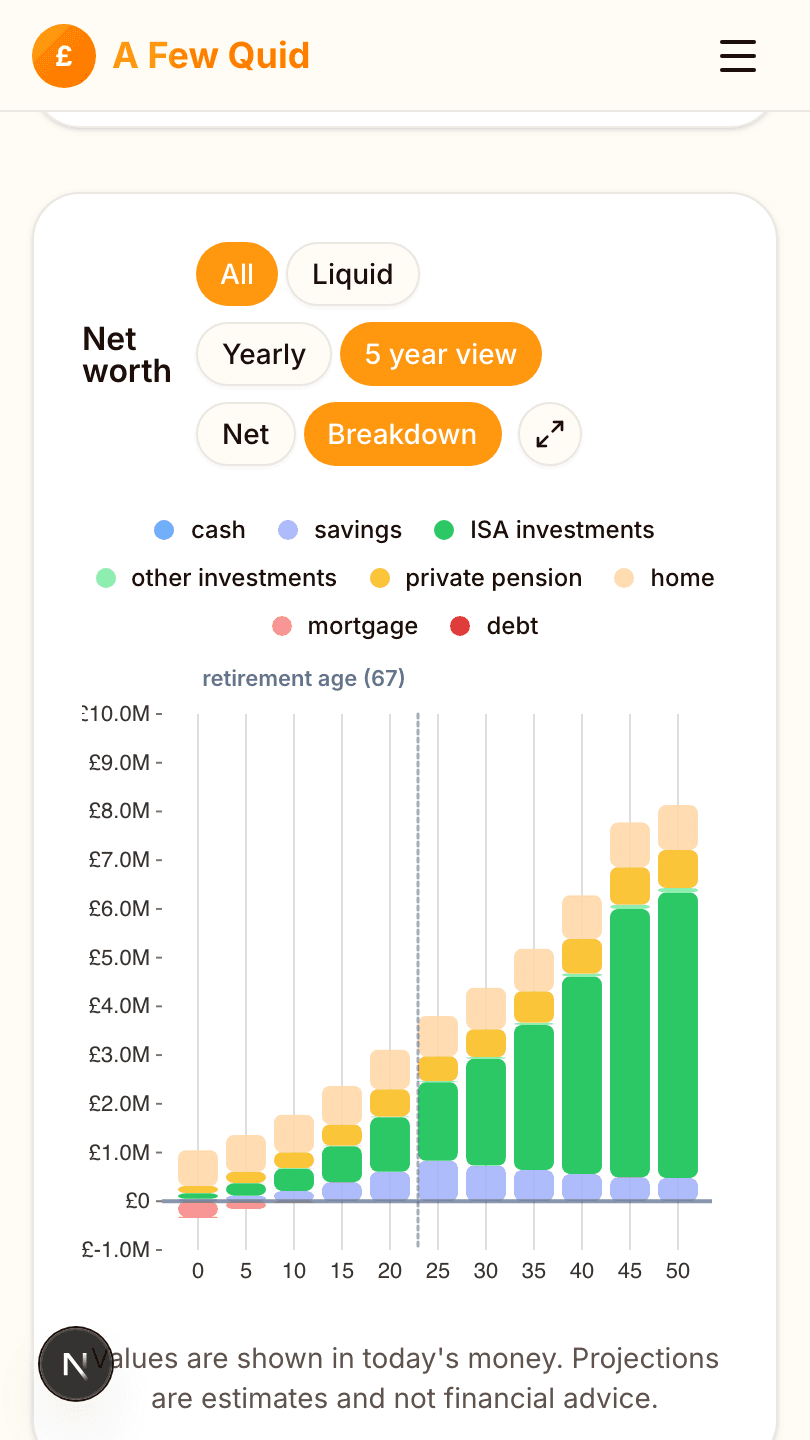
Paused contributions are not a small hit. They are money that would have been compounding for the rest of your working life. A year and a half of missed contributions, compounded for three decades at normal real returns, often grows into a retirement-pot shortfall that is larger than the missed take-home itself.
What most people leave out
- Employer contributions. For many plans the employer match is matched exactly by your own, so a paused you means a paused them.
- National insurance credits. A career break can leave gaps in your state pension record. They're fillable, but you have to remember.
- Salary sacrifice schemes. Some benefits reset when you return. Bonus accrual patterns sometimes don't resume cleanly.
- Re-entry salary compression. People often return at or near the rate they left, not on the curve they would have been on.
None of these are deal-breakers. Career breaks are fine. But the statement I can afford the salary drop and the statement I can afford the full cost are not the same sentence.
The partner question
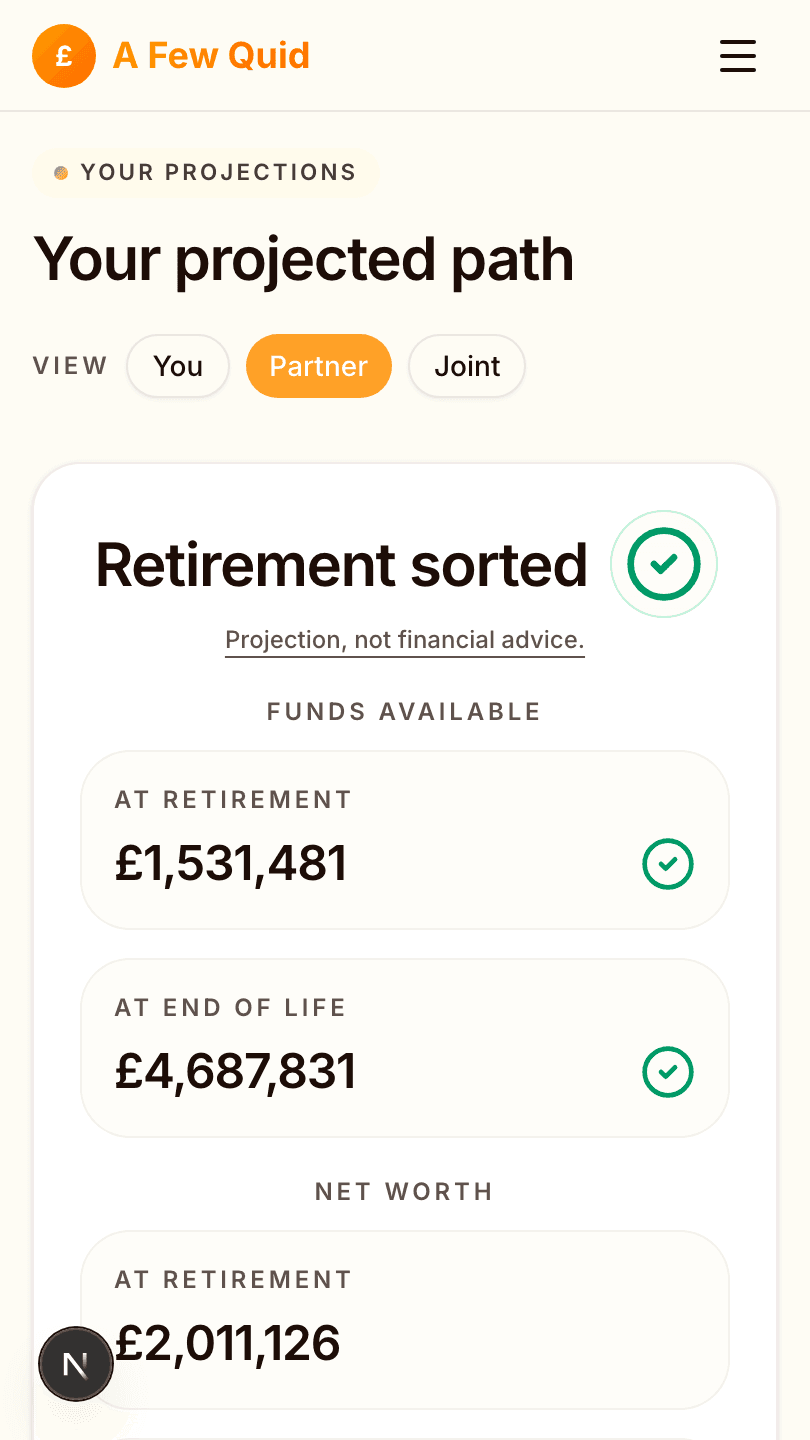
If you have a partner, their position matters too. A career break by one person can change the household's tax profile, the ability to use both allowances, the route to childcare funding, and the shared projection in ways that a single-earner view won't catch.
It is not that a partner's income changes your income tax band. It is that your partner's financial situation can have tax implications on you, especially around things like the child benefit charge, and the decision only makes sense with both people's finances on the same page.
Modelling it before you commit
A Few Quid lets you mark a defined period as a career break on your timeline. It zeroes income for that window, pauses pension contributions, and rolls the rest of the simulation forward. The line on the net worth chart is the real answer. Usually it does not look panic-shaped. Usually it is fine. But finding out fine, with the full picture, is better than finding out fine by hoping.
The point of modelling isn't to stop you taking the break. It is to let you take it with the real number, not a guess.